
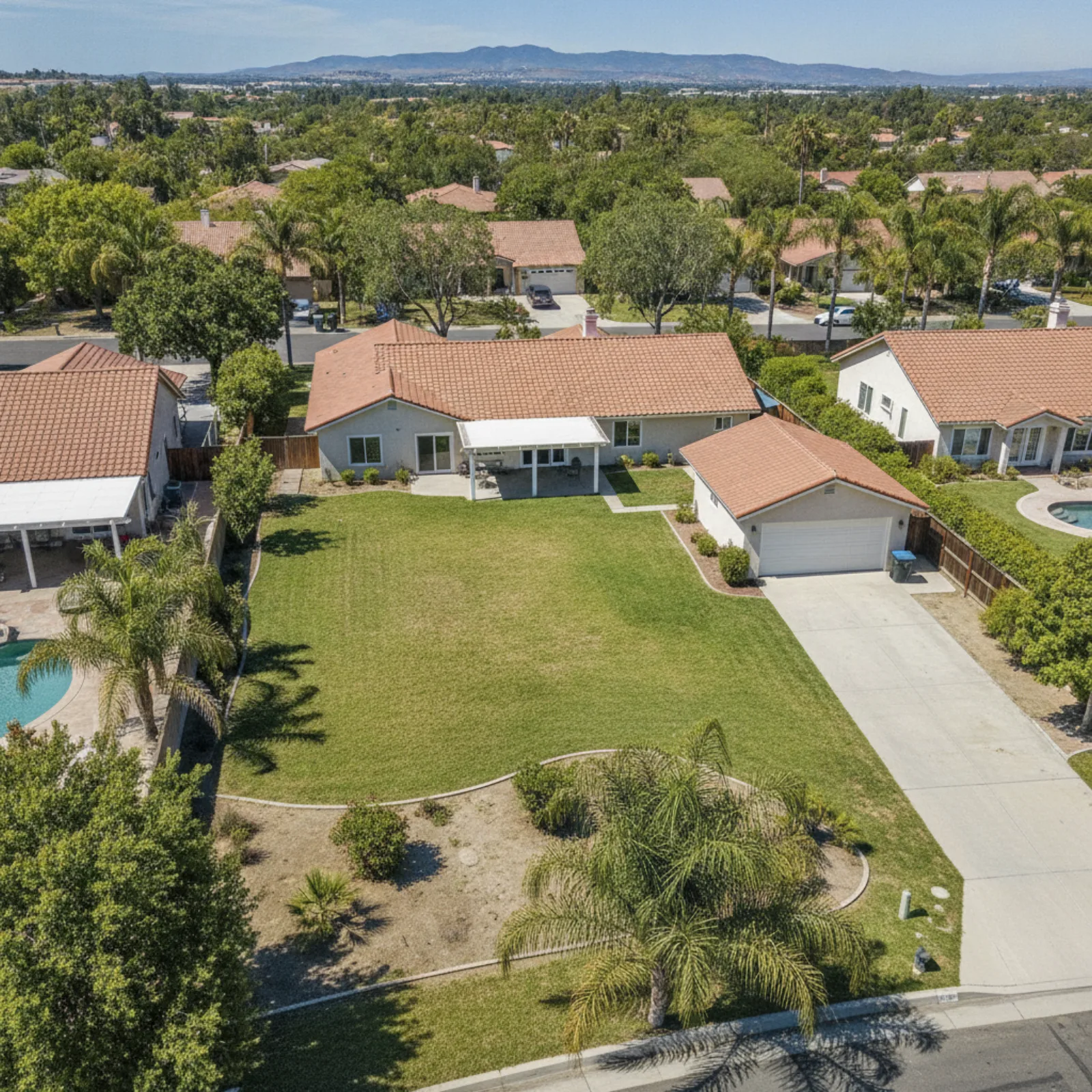
If you’re thinking about adding a backyard home in San Diego County, the first question isn’t what it should look like. It’s what your lot will actually allow. An adu feasibility san diego review answers that before a single drawing gets made, and it’s the step that separates projects that move forward from ones that stall for months or fall apart after permit review.
Here’s what goes into a feasibility check and why it should come before anything else.
Lot Size: The Starting Point
California’s ADU laws have opened up the landscape significantly. State law now allows most single-family lots to build at least one ADU and one Junior ADU (JADU), regardless of local zoning minimums. But lot size still shapes what you can build and where you can put it.
Smaller lots under 5,000 square feet can support ADUs, but may limit you to a smaller footprint or a garage conversion. Larger lots give you more room to place a detached unit without crowding the main house or running into setback conflicts.
Lot dimensions matter just as much as total square footage. A long, narrow lot presents different options than a wide square one at the same size. Feasibility maps this out so your design starts in the right place.
Setbacks: How Close Can You Build?
Setbacks are the minimum distances required between a structure and your property lines. For detached ADUs in most San Diego County jurisdictions, state law now allows a 4-foot rear and side setback. That’s far more permissive than older local rules used to be.
That said, some areas carry additional requirements. Coastal zones, hillside designations, and historic districts can introduce setback rules that go beyond the state baseline. Part of a feasibility review is checking your specific parcel against the rules that actually apply to it, not just the general rule.
Fire-Rated Walls and Neighboring Structures
If your lot line sits close to an existing structure, yours or a neighbor’s, fire-rated wall requirements can affect the design. A garage that sits right on the property line may need special wall assemblies. Knowing this before design starts keeps you from paying for plans that have to be revised after a permit reviewer flags it.
Utilities: Water, Sewer, Electrical
Adding a dwelling unit means adding utility demand. A feasibility check looks at three things.
Water meter capacity. Most existing residential meters can serve an ADU without an upgrade, but some older properties or properties with undersized meters may need a larger one. That cost varies by jurisdiction and water agency.
Sewer and septic. Properties on public sewer need to confirm the lateral can handle the added load. Properties on septic, more common in unincorporated San Diego County areas, need a capacity analysis. A septic upgrade can be a significant cost if the existing system isn’t sized for two units.
Electrical service panel. A detached ADU typically needs its own subpanel or separate meter. If your main panel is already at capacity, an upgrade becomes part of the project scope.
Utility constraints are the most commonly overlooked cost in ADU planning. Catching them in feasibility, before design starts, is what keeps your budget from shifting mid-project.
Slope and Grading
San Diego County has beautiful terrain, and a lot of it has slope. Slope affects ADU feasibility in a few meaningful ways.
Steeper lots require engineered foundations, typically piers or a stepped slab, instead of a standard pour. They may also need retaining walls, drainage systems, and geotechnical reports before permits can be issued. All of that is buildable. It just adds to scope and cost, and it’s better to know before design work begins.
Slope also affects access. An ADU that needs a new walkway across a steep grade becomes a more involved grading project. Feasibility maps the realistic path so the unit gets placed somewhere access actually works.
Site Access: Getting to the Unit
State law requires ADUs to have independent exterior access. For a detached backyard unit, that usually means a walkway from the street or driveway to the ADU’s front door.
On some lots, that path is straightforward. On others, particularly flag lots, lots with tight side yards, or lots with significant elevation change, creating code-compliant access takes real planning. A feasibility check identifies the path before the design locks in a location that creates a problem later.
What State Law Now Allows
California’s ADU reform laws, which have been expanding steadily since 2017, have removed many of the local restrictions that once made ADUs difficult to approve. Today, most single-family lots in California can build:
- One attached or detached ADU up to 1,200 square feet
- One Junior ADU up to 500 square feet inside the existing home
- Both of the above on the same lot
Local jurisdictions can still set standards for height, setbacks, and architectural compatibility. But they cannot use local rules to effectively block ADUs from being built. This shift matters because it means most San Diego County properties have real options. Feasibility determines which options fit your specific parcel.
Why Feasibility First Saves Money and Heartbreak
Skipping feasibility and going straight to design is a common and expensive mistake. Here’s what happens: a designer draws plans based on assumptions, the plans go to the city or county, and the permit reviewer flags a utility conflict or a setback issue that requires a redesign. You’ve already paid for drawings that don’t work, and now you’re paying again to fix them. The project timeline stretches by months.
A proper feasibility review looks at your actual parcel data before a single drawing is made. Lot dimensions, topography, utility connections, jurisdiction-specific rules, and site conditions all feed into a realistic picture of what’s possible. That means the design starts from truth, not assumptions.
It also gives you a real budget range before you’ve committed to anything. That’s the conversation that should happen first.
ADUz Does Feasibility Before Anything Else
ADUz is a family-owned company in San Diego County. We design and permit ADUs, and our licensed build partner The Rock Remodel (CA Lic. 1042918) handles construction. We work together from day one, so the feasibility review, the design, the permit set, and the build are all coordinated by people who actually talk to each other.
We’re bilingual and we’ve worked across San Diego County, from Oceanside to Chula Vista, from Santee to unincorporated areas where the rules work a little differently. We designed ADUz for the way your family grows, and that starts with an honest look at what your lot can do.
If you want to know what your property can support, the best next step is a conversation. Call ADUz at (760) 524-1754 for a free ADU consultation. We’ll pull up your parcel, walk through what’s realistic, and give you a straight answer. No pressure, no runaround, just a real conversation from a family that builds these for a living.